X5.1 Solar Flare Triggers Widespread Radio Blackouts Across Africa and Europe in 2025’s Strongest Eruption
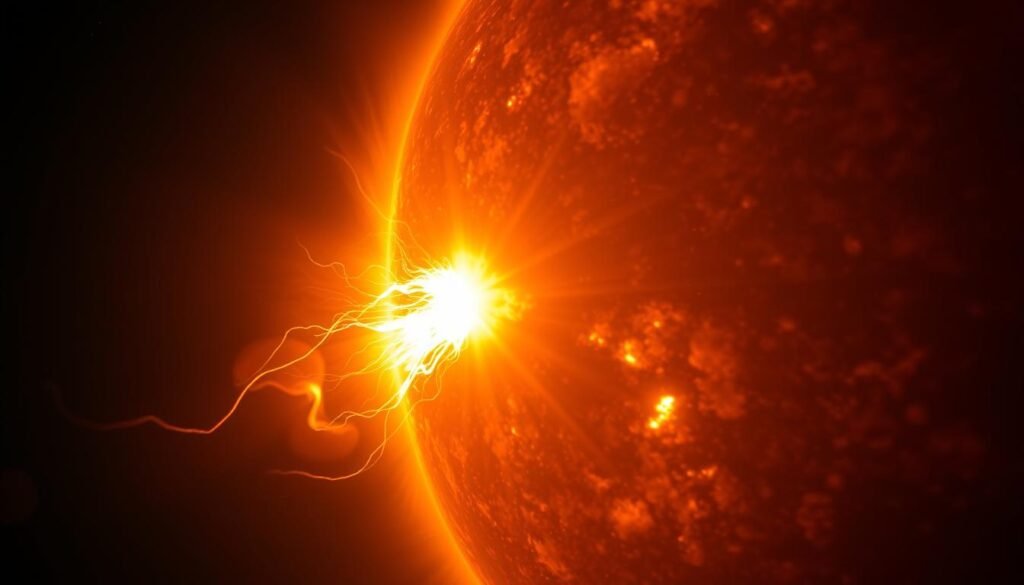
The sun unleashed its most powerful eruption of 2025 on November 11, sending an X5.1-class solar flare hurtling toward Earth. This massive burst of energy triggered strong radio blackouts across Africa and Europe, disrupting high-frequency communications and potentially setting the stage for spectacular auroras visible across much of the United States. Scientists are now monitoring the aftermath as multiple coronal mass ejections (CMEs) race toward our planet at speeds approaching 4.4 million mph.
Understanding Solar Flares and Their Impact
Solar flares are intense bursts of radiation that erupt from the sun’s surface when magnetic energy built up in the solar atmosphere is suddenly released. These powerful events can last from minutes to hours and emit radiation across the electromagnetic spectrum, from radio waves to gamma rays.
Scientists classify solar flares according to their X-ray brightness, using five categories: A, B, C, M, and X. Each category represents a tenfold increase in energy output, with X-class flares being the most powerful. The number following the X indicates the flare’s specific intensity within that class. At X5.1, the November 11 eruption ranks among the most powerful solar events we can experience.
Dr. Elena Rodriguez, solar physicist at the National Solar Observatory, explains: “This X5.1 flare is particularly significant not just for its intensity, but because it originated from an unusually active sunspot region that has produced multiple X-class flares in rapid succession. We’re seeing the kind of solar activity typically associated with solar maximum.”

Radio Blackouts: When Solar Radiation Meets Earth’s Atmosphere
When a solar flare erupts, it sends a surge of X-rays and extreme ultraviolet radiation toward Earth at the speed of light, reaching our planet in just over 8 minutes. This radiation interacts with the upper atmosphere, particularly the ionosphere (60-1,000 km above Earth’s surface), which plays a crucial role in radio communications.
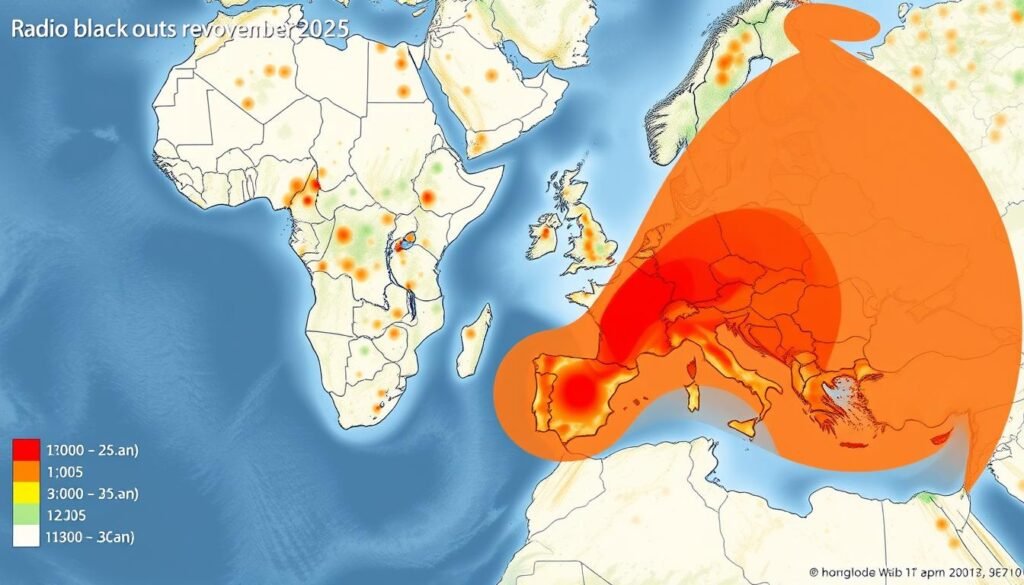
The November 11 X5.1 flare triggered R3-level (Strong) radio blackouts across Africa and Europe, the regions facing the sun at the time of the eruption. R3 blackouts can cause widespread disruption to high-frequency radio communications, affecting:
“When intense solar radiation hits the ionosphere, it causes excessive ionization, essentially overloading the medium through which radio waves travel,” explains Dr. Marcus Wei, communications specialist at the International Telecommunications Union. “It’s like trying to see through extremely foggy conditions—the signals simply can’t penetrate or become too distorted to be useful.”
Stay Informed About Critical Space Weather Events
Solar activity is increasing as we approach solar maximum. Don’t miss important updates about solar flares, geomagnetic storms, and potential technology disruptions. Our space weather alerts provide timely information about events that could affect communications, power grids, and create aurora viewing opportunities.
Multiple CMEs Racing Toward Earth
While radio blackouts occur almost immediately after a solar flare, they’re often just the first impact of a solar eruption. Many powerful flares, including the November 11 X5.1 event, are accompanied by coronal mass ejections (CMEs)—massive clouds of solar plasma and magnetic fields ejected from the sun’s corona.
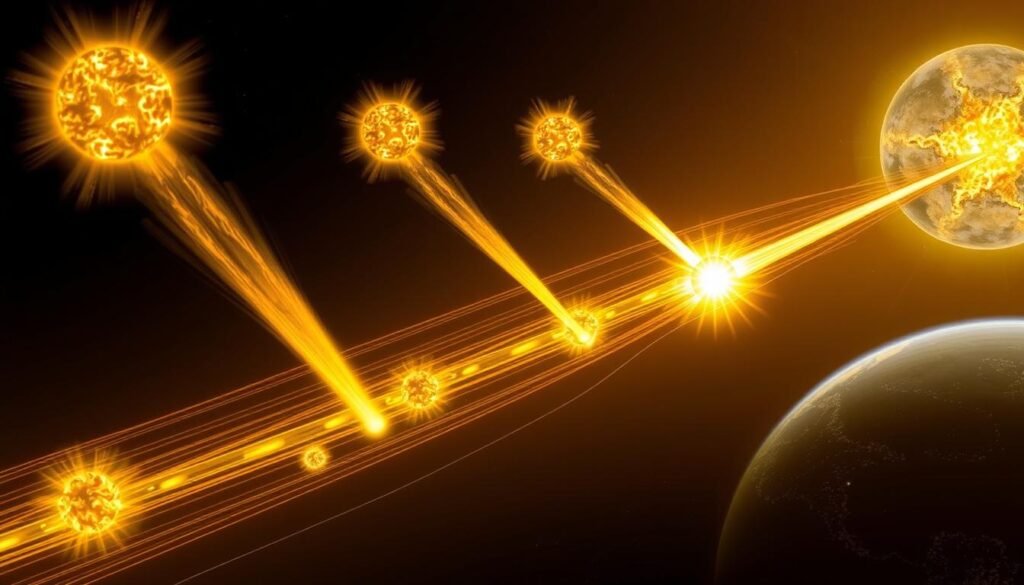
The active sunspot region AR4274 has produced three significant eruptions in rapid succession:
| Date | Flare Class | CME Speed | Expected Earth Impact |
| November 9, 2025 | X1.7 | ~2.2 million mph | November 11 (evening) |
| November 10, 2025 | X1.2 | ~2.5 million mph | November 11-12 (overnight) |
| November 11, 2025 | X5.1 | ~4.4 million mph | November 12 (midday) |
What makes this situation particularly noteworthy is the potential for these multiple CMEs to interact. When a faster CME catches up to a slower one, they can combine in a process scientists call “CME cannibalization,” potentially creating a stronger geomagnetic storm upon reaching Earth.
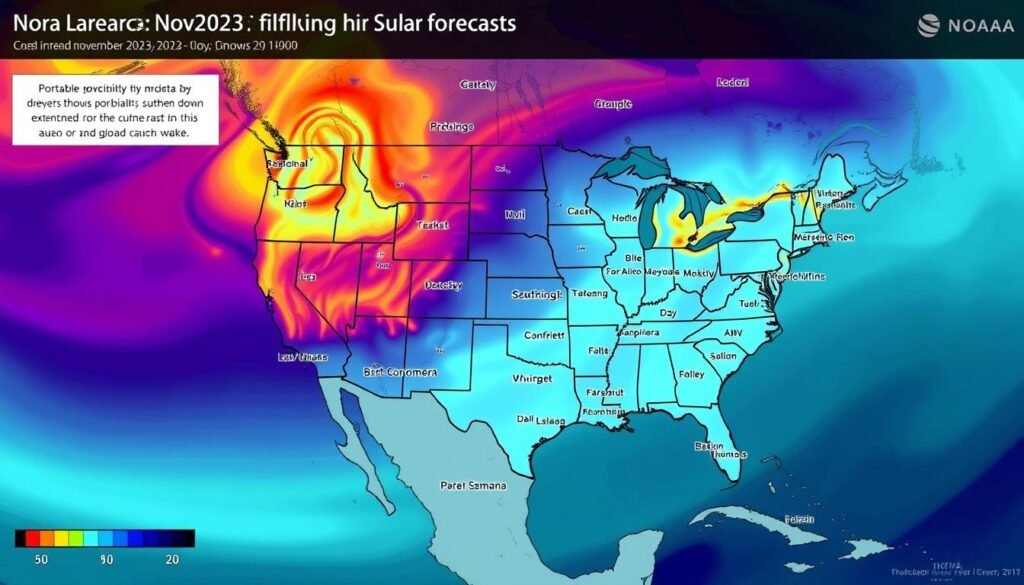
NOAA’s Space Weather Prediction Center has issued a G3 (Strong) geomagnetic storm watch for November 11-12, with the possibility of upgrading to a G4 (Severe) watch as the November 11 CME approaches. G4 storms can cause:
Technological Impacts
- Power grid fluctuations and voltage alarms
- Satellite orientation issues requiring corrections
- Degraded GPS accuracy for several hours
- HF radio propagation unreliable
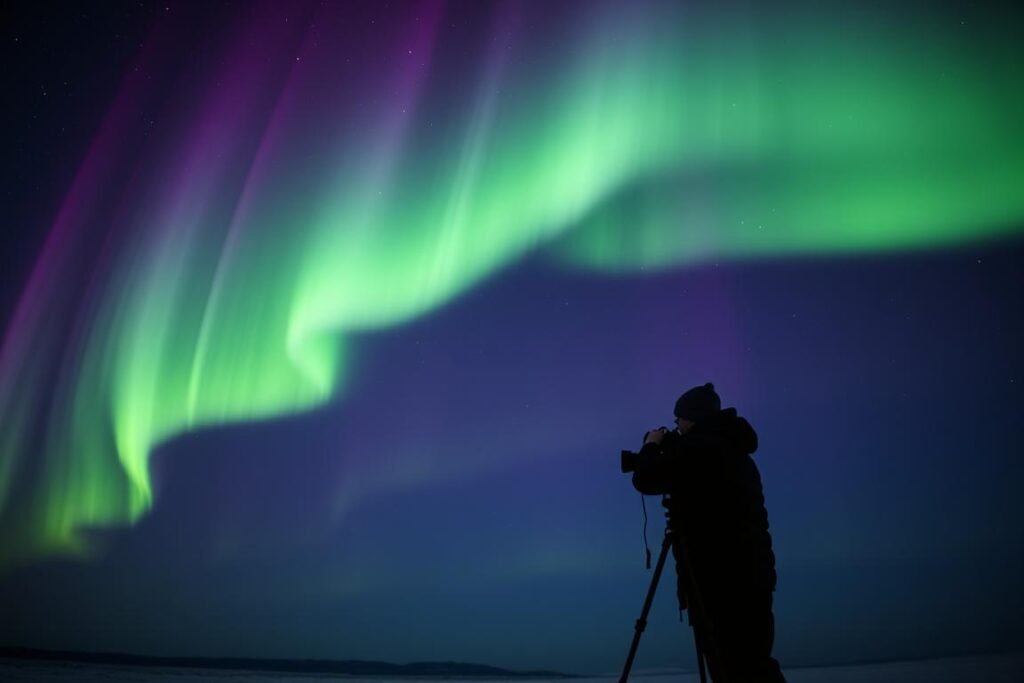
Aurora Viewing
- Visible as far south as Alabama and northern California
- Best viewing times: November 12-13 nights
- Look for green, red, and purple curtains of light in the northern sky
- Find dark locations away from city lights
Solar Cycle 25: Context and Future Expectations
The November 11 X5.1 flare is part of a broader pattern of increasing solar activity as we progress through Solar Cycle 25, which began in December 2019. Solar cycles typically last about 11 years, with activity rising to a peak (solar maximum) before declining toward solar minimum.
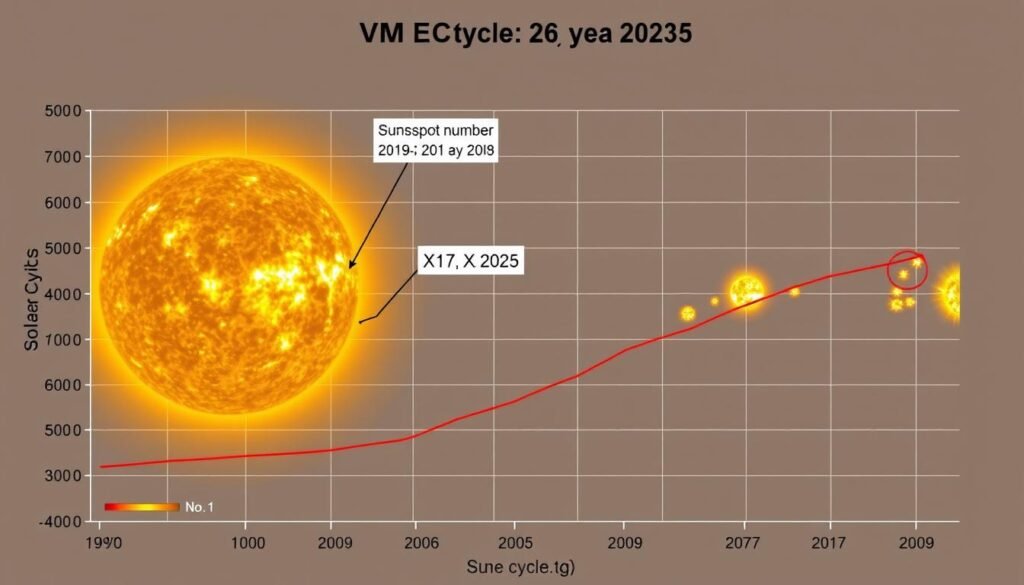
“We’re currently experiencing what appears to be the peak of Solar Cycle 25,” notes Dr. Samantha Chen, heliophysicist at the Space Weather Prediction Center. “This cycle has proven more active than initially predicted, with a higher frequency of X-class flares than we anticipated. The November 11 X5.1 event is consistent with this enhanced activity pattern.”
Looking ahead, space weather experts suggest we may continue to see significant solar activity through 2026, with a gradual decline thereafter. However, powerful eruptions can occur at any point in the solar cycle, even during the declining phase.
How can I protect my technology during solar storms?
For most consumer electronics, no special precautions are necessary during solar storms. However, during severe (G4) or extreme (G5) geomagnetic storms, consider:
- Backing up important data
- Using surge protectors for sensitive electronics
- Having alternative communication methods available if you rely on GPS for critical functions
- Following official guidance from power companies and emergency management agencies
When and where can I see the aurora?
For the current geomagnetic storm, aurora viewing is most likely on the nights of November 12-13, 2025. The best viewing conditions require:
- Clear, dark skies away from city lights
- A view of the northern horizon (in Northern Hemisphere)
- Patience – auroras can be unpredictable and may appear in waves
Check specialized aurora forecast websites or apps for real-time predictions specific to your location.
Resources for Monitoring Space Weather
For those interested in tracking solar activity and potential impacts, several reliable resources provide real-time data and forecasts:
NOAA Space Weather Prediction Center
Official U.S. government source for space weather forecasts, warnings, alerts, and data.
SpaceWeatherLive
User-friendly portal with real-time solar data, aurora forecasts, and educational resources.
NASA Solar Dynamics Observatory
Stunning imagery and scientific data from NASA’s solar observation satellite.

The Sun’s Increasing Influence on Our Technological World
The November 11, 2025 X5.1 solar flare serves as a powerful reminder of our star’s dynamic nature and its ability to impact life on Earth. As our society becomes increasingly dependent on technologies vulnerable to space weather—from GPS navigation to power grids—understanding and forecasting these events grows more critical.
While the immediate radio blackouts across Africa and Europe have subsided, the incoming coronal mass ejections may create further disruptions alongside spectacular aurora displays in the coming days. This event, the strongest of 2025 so far, highlights the importance of continued investment in space weather monitoring and resilient infrastructure as we navigate the active phase of Solar Cycle 25.
Stay Informed
Space weather conditions can change rapidly. For the most current information about ongoing solar activity and potential impacts, consult official sources like the NOAA Space Weather Prediction Center and follow guidance from local emergency management agencies during severe geomagnetic storms.